
Quick Answer
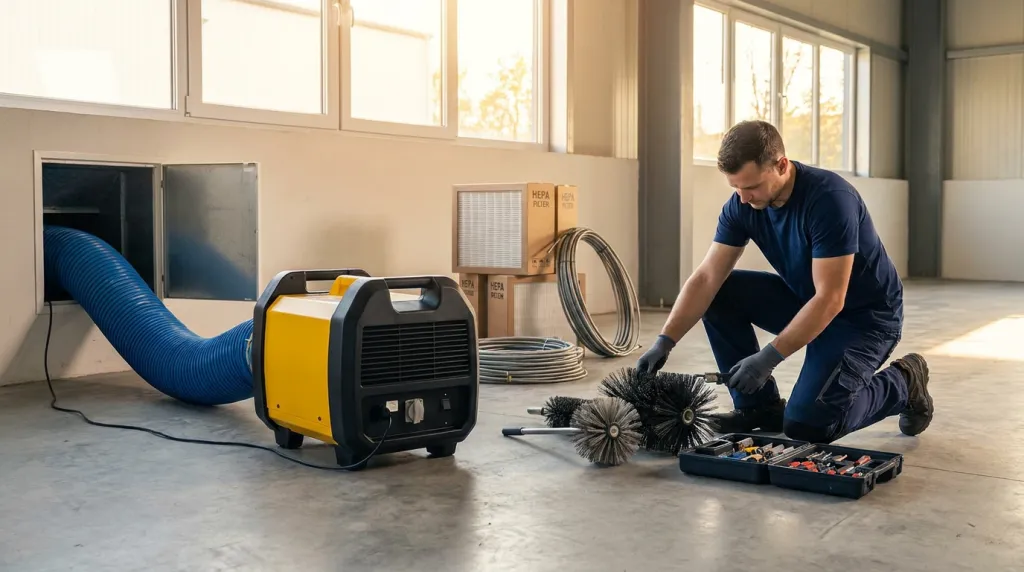
Professional air duct cleaning equipment and tools combine high-powered vacuum collection systems, rotating brush agitation devices, and compressed air tools to dislodge and remove dust, debris, and contaminants from HVAC systems. The equipment creates negative pressure inside the ductwork so loosened particles are pulled into a sealed collection container rather than released into the home. The right combination of tools, not just a single machine, is what determines whether a cleaning actually meets industry standards.
Most homeowners picture a shop vac and a long brush when they think about duct cleaning. In reality, a compliant job uses a coordinated system of negative-air machines, rotary agitation devices, compressed air tools, and video inspection cameras, often representing tens of thousands of dollars in equipment investment. Understanding air duct cleaning equipment and tools helps explain why professional results look nothing like a DIY vacuum pass, and why the air duct cleaning process involves far more engineering than most people expect.
The National Air Duct Cleaners Association (NADCA) sets equipment and methodology standards that separate legitimate HVAC cleaning from guesswork. This article breaks down exactly how each major piece of equipment functions, what distinguishes professional-grade tools from consumer alternatives, and why the technology behind the job is a big part of what you’re paying for.
What Is Air Duct Cleaning Equipment, Exactly?
Air duct cleaning equipment refers to the full set of machines and tools used to remove dust, debris, pet dander, mold spores, and other contaminants from HVAC ductwork. This isn’t one device. It’s a system made up of a power vacuum unit, agitation tools, compressed air equipment, and inspection technology, all working together.
NADCA’s ACR Standard (Assessment, Cleaning, and Restoration) requires that a cleaning method physically remove debris from every component of the system, not just push it around. That’s why a single vacuum pass without agitation tools typically fails to meet professional standards.
- Source removal equipment: vacuums and collection devices that physically extract debris from the system
- Agitation devices: brushes, whips, and air tools that loosen contaminants stuck to duct walls
- Containment tools: access panels, negative air machines, and sealing equipment that prevent dust from escaping into living spaces
- Inspection technology: cameras and borescopes used to verify results before and after the job
How Does Negative-Pressure Vacuum Collection Work?
The core of any professional system is a high-powered vacuum collection device that creates negative pressure, meaning air pressure inside the duct is lower than the surrounding environment. This pulls loosened dust and debris toward the vacuum source instead of letting it blow back into the home through registers.
There are two broad categories of these systems, and the difference matters for airflow volume and suction strength.
| System Type | Typical Airflow | Best Use Case |
|---|---|---|
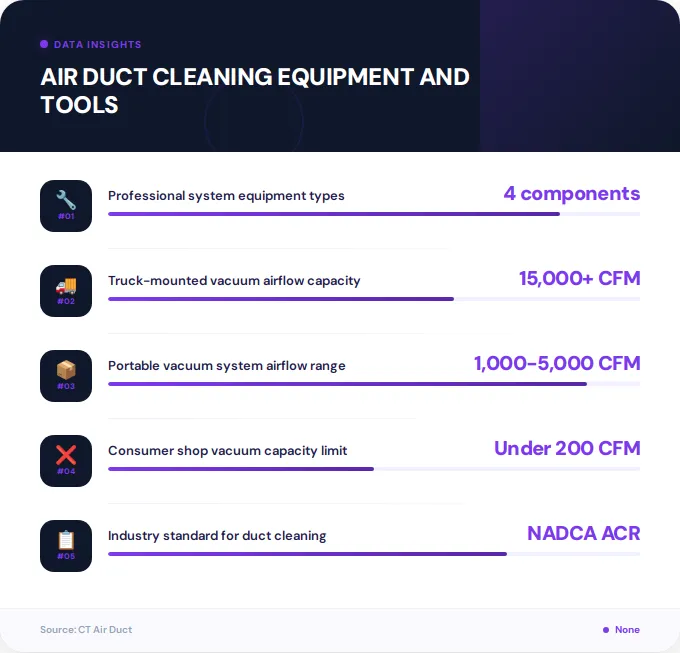
| Truck-mounted vacuum | Up to 15,000+ CFM | Large homes, long duct runs, heavy debris loads |
| Portable/trailer-mounted vacuum | 1,000 to 5,000 CFM | Tight access, apartments, commercial units on upper floors |
| Consumer shop vacuum | Under 200 CFM | Not rated for whole-duct-system cleaning |
CFM, or cubic feet per minute, measures how much air (and the debris carried with it) the machine can move. A unit that only reaches a few hundred CFM simply cannot create enough negative pressure to pull debris out of a branch line 30 feet away, which is one reason consumer-grade tools fall short of what NADCA-certified equipment achieves.
What Agitation Tools Dislodge Dust and Debris?
Suction alone rarely removes debris that’s bonded to duct walls through moisture, grease, or years of buildup. That’s where agitation devices come in, and they’re often the most misunderstood part of the process.
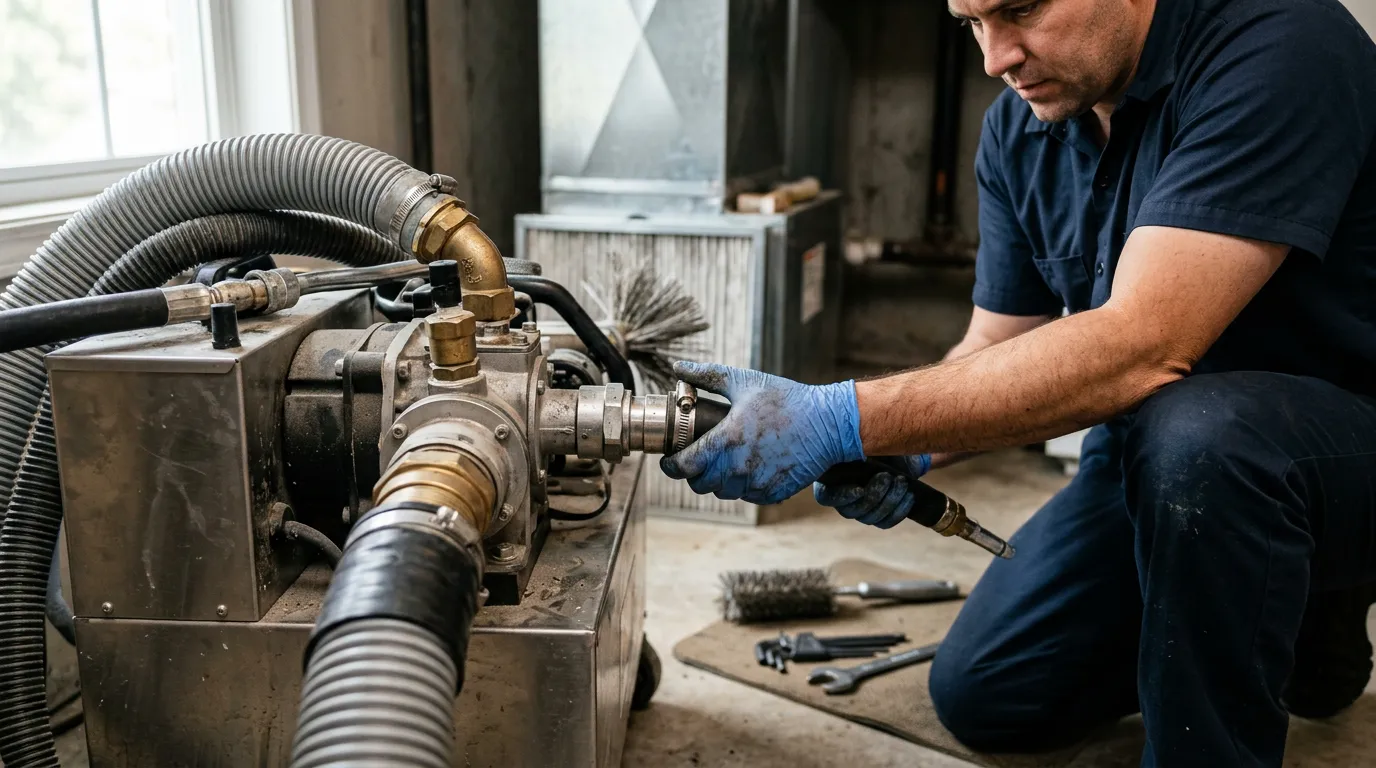
- Rotary brush systems: motorized brushes on flexible shafts that spin inside the ductwork, physically scrubbing interior surfaces as the vacuum collects loosened material
- Compressed air whips: flexible nozzles that shoot bursts of compressed air (often 90 to 200 PSI) to knock dust free from hard-to-reach bends and sheet metal seams
- Skipper balls: air-powered devices that bounce through ductwork, dislodging compacted debris in long horizontal runs
- Power air blow guns: handheld tools used at register and return openings to push debris toward the main collection point
Technicians typically select tools based on duct material. Flexible brushes work well in sheet metal trunks, while compressed air tools are often preferred in flex duct or fiberglass-lined systems where aggressive brushing could cause damage. This is the same reasoning covered in our breakdown of what causes air duct contamination, since the type of buildup often dictates the right agitation method.
How Do Technicians Inspect Ducts Before and After Cleaning?
Professional crews use video inspection cameras, often mounted on flexible rods, to see inside ductwork before starting and to document results afterward. This serves two purposes: it identifies the type and severity of contamination so the crew picks the right tools, and it gives homeowners visual proof of what was removed.
Borescope cameras can reach into branch lines as small as a few inches in diameter, areas no human hand or eye could otherwise access. Some companies also use static pressure gauges to measure airflow before and after cleaning, giving a measurable before-and-after comparison rather than a visual impression alone.
This documentation step matters more than many homeowners realize. If you’re trying to decide whether a company is following NADCA certification standards, ask whether before-and-after video is part of the standard service, not an upsell.
Portable vs. Truck-Mounted Systems: Which Is Better?
Neither system is universally “better,” but each has tradeoffs worth understanding before you book a service.
Noise level: Lower indoors (motor stays outside)
Best for: Full-house, large commercial jobs
Limitation: Needs driveway/street access and hose runs
Noise level: Higher, unit runs indoors or near entry
Best for: Condos, apartments, tight urban lots
Limitation: Lower max airflow on very large systems
Reputable companies often carry both, choosing the setup that fits the property type rather than forcing one tool on every job. This flexibility is one marker of a properly equipped crew, distinct from operations running a single consumer-grade unit out of a van.
Why Does the Equipment Used Actually Matter to You?
The quality and completeness of the equipment used directly affects whether contaminants are actually removed or simply stirred up and partially recaptured. Underpowered equipment can leave debris behind, push dust into living spaces through poorly sealed access points, or miss branch lines entirely.
This matters most for households dealing with allergies, asthma, or past water damage in the ductwork. If you’ve wondered whether duct cleaning really helps allergies, the honest answer depends heavily on whether source-removal equipment and proper containment were used, not just whether “a cleaning” happened.
Correct equipment use also protects the system itself. Rough or improperly powered brushing can tear flex duct or damage fiberglass lining, turning a cleaning into a repair job. That’s part of why understanding ductwork replacement costs is useful context: equipment misuse is one of the preventable reasons ductwork needs early replacement.
What Drives the Cost of a Professional Cleaning?
Pricing for professional duct cleaning varies widely based on the number of vents, duct material, system accessibility, level of contamination, and whether additional services like dryer vent cleaning are included. Homes with extensive mold growth, rodent debris, or renovation dust typically require more agitation time and specialized containment, which affects labor hours.
Because equipment-heavy jobs (truck-mounted vacuums, multiple agitation tools, video documentation) cost more to run than a single shop vac, pricing reflects the actual technology and labor involved, not just a flat per-vent rate. For a full breakdown of what influences pricing, see our air duct cleaning cost breakdown, and check current pricing information for service tiers.
Pricing always varies based on your specific project, so the most accurate way to know what your home will cost is to request a custom quote rather than rely on a generic estimate.
Key Takeaways
- Professional duct cleaning equipment combines vacuum collection, agitation tools, and inspection cameras, not a single device.
- CFM (cubic feet per minute) measures vacuum strength, and consumer shop vacuums fall far short of NADCA-recommended airflow levels.
- Agitation tools like rotary brushes and compressed air whips do the physical work of loosening debris that suction alone can’t remove.
- Video inspection before and after cleaning provides measurable proof of results, not just a visual estimate.
- Truck-mounted and portable systems each have tradeoffs, and reputable companies carry both to match the property type.
- Improper equipment use can damage ductwork, making correct tool selection as important as raw suction power.
- Cost varies by system size, contamination level, and equipment required, so a custom quote is the only reliable estimate.
People Also Ask
What equipment is used for professional air duct cleaning?
Professional crews use high-powered vacuum collection systems (truck-mounted or portable), rotary brush agitation tools, compressed air whips, and video inspection cameras. These work together to loosen and remove debris rather than just push it around the system.
Can I clean my own air ducts with a shop vac?
A standard shop vac generally lacks the airflow (CFM) needed to pull debris through long duct runs and can’t reach branch lines without specialized attachments. It may remove surface dust near vent openings but won’t meet NADCA’s source-removal standard for the full system.
What is the Bullet Pro and similar rotary brush systems?
These are motorized rotary brush devices on flexible shafts that spin inside ductwork to scrub interior surfaces. They’re used alongside a vacuum collection system so loosened debris is captured rather than left inside or blown into the home.
How do technicians know the ducts are actually clean afterward?
Many professional crews use video borescope cameras to inspect the ductwork before and after cleaning, providing visual proof of debris removal. Some also measure airflow with static pressure gauges to confirm improved system performance.
Frequently Asked Questions
What’s the difference between truck-mounted and portable duct cleaning equipment?+
Truck-mounted systems keep the motor outside the home and generally offer higher CFM for large or complex systems. Portable units are used when truck access isn’t possible, such as apartments or upper-floor condos, and still meet professional airflow standards for most residential jobs.
Does agitation equipment damage ductwork?+
When used correctly by trained technicians, agitation tools are matched to the duct material, softer compressed air tools for flex duct, rotary brushes for sheet metal, so damage is rare. Problems occur when the wrong tool or excessive pressure is used, which is why technician training matters as much as the equipment itself.
How long does a professional duct cleaning take with this equipment?+
Most residential jobs take a few hours depending on the number of vents, system size, and contamination level. For a detailed timeline breakdown, see our guide on how long air duct cleaning takes.
Is the same equipment used for dryer vent cleaning?+
Dryer vents require different tools, typically rotary brushes sized for narrower vent diameters and specialized vacuum attachments, because lint buildup behaves differently than HVAC dust. Learn more in our guide to dryer vent cleaning.
Does better equipment mean a higher price?+
Generally yes, since truck-mounted systems, multiple agitation tools, and video documentation all represent a larger equipment and labor investment than a basic vacuum pass. Pricing varies based on your specific project, so it’s best to request a custom quote that reflects your system’s size and condition.
How do I know if a company is using proper equipment?+
Ask whether they use source-removal vacuum systems rated in CFM, agitation tools matched to your duct material, and video documentation of results. NADCA-certified companies are trained to follow these standards consistently.
Understanding the technology behind the service helps you ask better questions and recognize real quality when you see it. If you’re ready to see this equipment in action, CT Air Duct can walk you through the process and provide a written, no-obligation quote based on your home’s specific system. Contact us today to schedule an inspection.