
Quick Answer
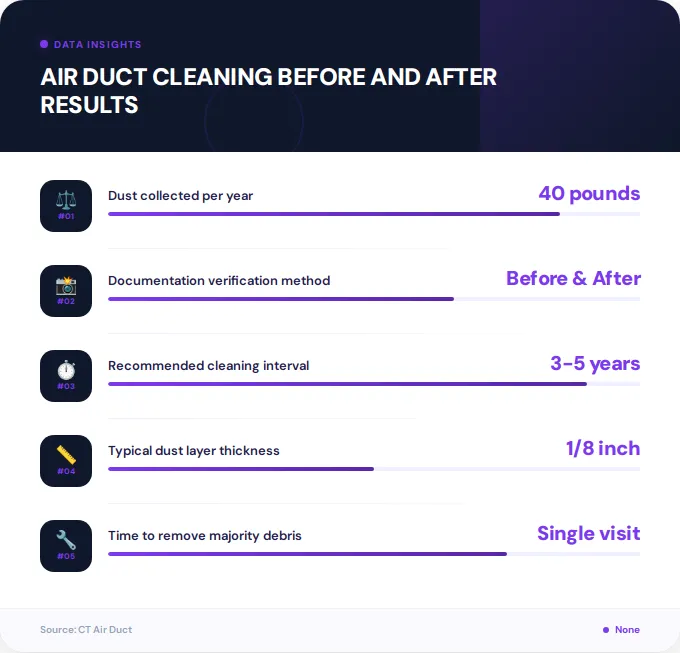
Air duct cleaning before and after results typically show a dramatic shift from thick layers of dust, pet hair, and debris coating the interior of ductwork to visibly clean, bare metal surfaces. The EPA notes a typical six-room home can collect up to 40 pounds of dust, dirt, and debris per year inside its duct system, and professional cleaning removes the vast majority of it in a single visit. Photos and video inspection are the clearest way to verify the work was done correctly, which is why reputable companies document every job.
What Is Air Duct Cleaning, and Why Do Before and After Photos Matter?
Air duct cleaning is the mechanical process of removing dust, debris, allergens, and microbial growth from the inside of a home’s heating, ventilation, and air conditioning (HVAC) system. It involves agitating buildup inside the supply and return ducts with specialized brushes and air whips, then extracting everything with high-powered vacuum equipment connected to the system.
Air duct cleaning before and after results are the single clearest way homeowners can confirm the service actually happened and actually worked. Because the ducts are hidden behind walls, ceilings, and floors, there is no way to inspect the work with the naked eye once the technician packs up. Photos taken with a borescope camera, or snapshots of the actual components before removal and after reinstallation, give customers visual proof of the transformation.
At CT Air Duct, every job includes before and after documentation so customers can see exactly what came out of their system. This is also why professional air duct cleaning has become a trust-building service: the results are tangible, not theoretical.
What Do Dirty Ducts Actually Look Like Before Cleaning?
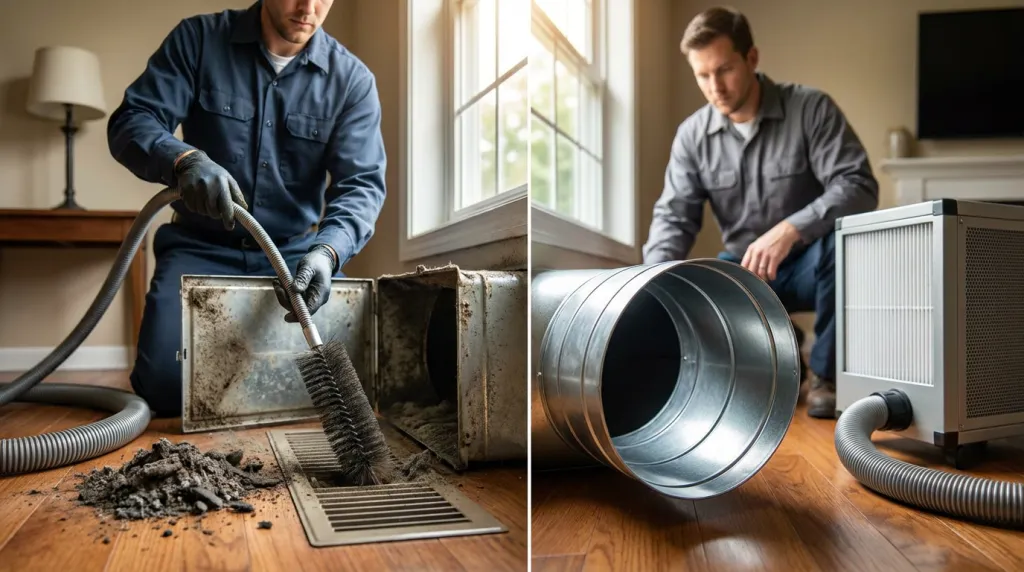
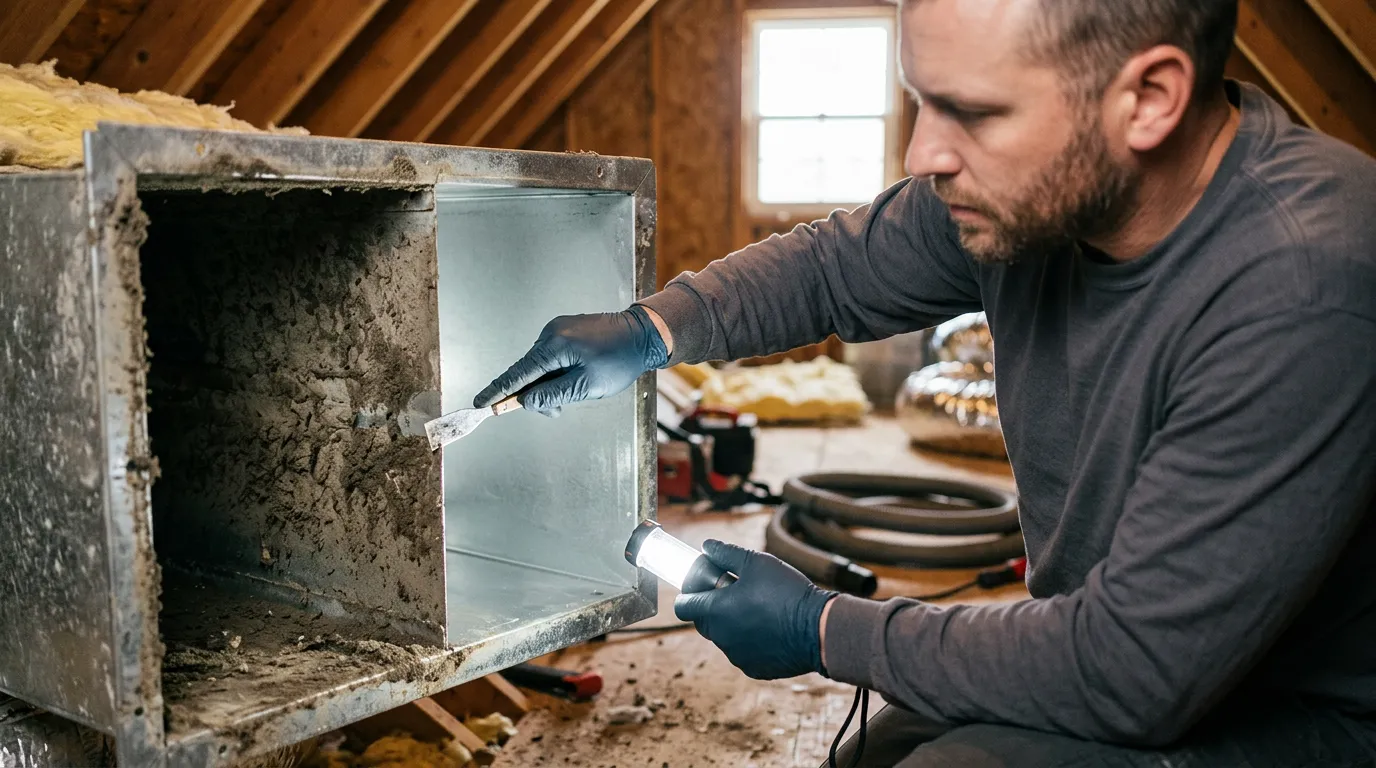
“Before” photos from real residential jobs tend to show a consistent pattern. Interior duct walls are coated in a gray or black felt-like layer of dust, often an eighth of an inch thick or more. Return vents commonly reveal matted pet hair, dryer lint fragments, and in older homes, construction debris left behind from the original build.
Some of the most dramatic before photos come from systems that have never been cleaned. According to the National Air Duct Cleaners Association (NADCA), ducts that go uncleaned for more than three to five years can accumulate enough debris to restrict airflow by a measurable percentage, forcing the HVAC system to work harder. Homeowners are often shocked when a technician pulls a camera out of a supply register and the screen shows what looks like a chimney flue rather than a clean metal duct.
- Dust and debris buildup: A fine, compacted layer coating duct walls, often visible at the vent opening without a camera.
- Pet hair and dander: Especially common in homes with multiple pets, often tangled around the blower wheel.
- Mold or microbial growth: Dark staining or a musty odor near condensation points, usually at the evaporator coil or in humid basements.
- Rodent or insect evidence: Nesting material, droppings, or shed insect casings in unsealed duct runs.
- Construction debris: Drywall dust, sawdust, or even leftover tools and packaging from renovation work.
Understanding what causes air duct contamination helps explain why these before photos look the way they do. Every source, from pets to outdoor air infiltration, leaves its own signature behind in the ductwork.
How Does the Cleaning Process Transform the Ductwork?
The transformation from “before” to “after” happens through a multi-step mechanical process, not a quick vacuum pass. Technicians first inspect the system with a camera, then seal all registers except one and connect a negative-air vacuum unit to the main trunk line. This creates a vacuum throughout the entire duct system before any agitation begins, so loosened debris is pulled toward the vacuum rather than spread into the living space.
Rotary brushes, compressed-air whips, and skipper balls are then run through each duct run, knocking contaminants loose so the vacuum can capture them. The blower motor, evaporator coil, and plenum are cleaned separately since they often hold the heaviest concentrations of dust and grime. A full explanation of this sequence is covered in our guide on how long air duct cleaning takes, since timing depends heavily on how many steps the system requires.
What Measurable Results Should You expect After Cleaning?
A well-executed cleaning produces results that go beyond appearance. Airflow typically improves because the restriction caused by debris buildup is removed, which can help an HVAC system run closer to its designed efficiency. Many homeowners also report a noticeable reduction in household dust on furniture and surfaces within the first week or two after cleaning.
Odor reduction is another commonly reported outcome, particularly in homes where musty or stale smells were traced back to microbial growth inside the ducts or at the coil. For allergy and asthma sufferers, the drop in airborne allergens can be significant, though results vary by household. Our deeper look at whether duct cleaning really helps allergies breaks down what the science supports and what it doesn’t.
| Condition | Before Cleaning | After Cleaning |
|---|---|---|
| Duct interior appearance | Gray/black dust coating, visible buildup at registers | Bare metal, visible seams and surface |
| Airflow at vents | Noticeably weak in some rooms | Consistent airflow throughout the home |
| Household dust | Frequent resettling on surfaces | Reduced dust accumulation reported by many customers |
| Odor | Musty or stale smell when system runs | Neutral or fresher smelling air |
When Do You Need Air Duct Cleaning?
NADCA and the EPA generally recommend having ducts inspected every two years, with cleaning as needed based on condition rather than a strict calendar. Certain triggers move cleaning up the priority list regardless of when the last service happened.
- Visible dust or debris blowing out of registers when the system starts up.
- Recent renovation or construction that introduced drywall dust or insulation fibers into the system.
- New home purchase where duct history is unknown, especially homes more than two years old without documented cleaning.
- Pest infestation evidence such as droppings, nests, or odors tied to the ductwork.
- Unexplained allergy or respiratory symptoms that improve when away from the house.
- Visible mold growth on any accessible duct surface or near the HVAC unit.
If your ductwork is older or damaged beyond cleaning’s ability to help, it may be worth reviewing ductwork replacement cost as an alternative, since severely corroded or leaking ducts sometimes need replacement rather than cleaning.
What Affects the Price of Air Duct Cleaning?
Pricing varies based on your specific project, and several factors determine where a job falls on the spectrum. The size of the home and number of duct runs is the biggest driver, since more vents and longer trunk lines mean more labor and equipment time. The condition of the ductwork matters too: a system with heavy mold growth or years of neglected buildup takes longer to clean thoroughly than one that’s simply due for routine maintenance.
Accessibility also plays a role. Ducts that run through tight crawlspaces or finished basements with limited access can add time and complexity compared to an open, accessible attic system. Additional services like sanitizing treatments, coil cleaning, or dryer vent cleaning bundled into the same visit will also affect the total. For a full breakdown of these cost drivers, see our air duct cleaning cost breakdown for 2026, and reach out through our contact page for a free, written, no-obligation quote specific to your home.
How Can You Verify the Job Was Done Right?
The rise of low-quality “duct cleaning” scams, where a technician spends ten minutes vacuuming only the visible registers, has made verification more important than ever. Legitimate companies document their work with before and after camera footage, not just a verbal assurance that “it’s done.”
Ask any company you’re considering whether they provide photo or video evidence, and confirm they follow NADCA standards for source removal cleaning. Our NADCA certification checklist explains exactly what credentials and practices to look for before hiring anyone. A reputable technician will happily show you the main trunk line, the blower compartment, and at least a few individual registers on camera both before work begins and after it’s finished.
Key Takeaways
- Air duct cleaning before and after photos are the most reliable way to confirm thorough, professional work was performed.
- A typical six-room home can accumulate up to 40 pounds of dust and debris in its ductwork annually, according to EPA data.
- “Before” photos commonly show thick dust coatings, pet hair, mold staining, or construction debris inside duct runs.
- Proper cleaning uses negative-air vacuum systems paired with mechanical agitation, not a simple surface vacuum pass.
- Results often include improved airflow, reduced household dust, and better odor control, though outcomes vary by home.
- Pricing depends on home size, duct condition, accessibility, and any bundled services, so a custom quote is the best way to know your cost.
- Always ask for camera documentation and NADCA-standard practices before hiring an air duct cleaning company.
People Also Ask
What do clean air ducts look like compared to dirty ones?
Clean air ducts show bare, visible metal with no dust coating, while dirty ducts are typically covered in a gray or black layer of compacted dust, hair, and debris. A camera inspection is the clearest way to see the difference since most ductwork is hidden inside walls and ceilings.
How do I know if my duct cleaning was done properly?
Ask for before and after camera footage of the main trunk lines, blower compartment, and several registers. A properly cleaned system should show bare metal surfaces and no visible dust buildup when reinspected.
Is it normal to see mold in ductwork before cleaning?
Mold growth is not normal but is commonly discovered in homes with high humidity, condensation issues, or long-neglected systems. If mold is found, a technician should address the moisture source in addition to cleaning the ducts.
How soon will I notice a difference after duct cleaning?
Many homeowners notice improved airflow and a fresher smell immediately, while reduced household dust often becomes noticeable within one to two weeks. Allergy symptom improvement, if it occurs, tends to show up gradually over the following weeks.
Can duct cleaning damage my ductwork?
Properly performed cleaning by trained technicians using NADCA-standard equipment should not damage ductwork. Risk increases only when inexperienced providers use overly aggressive tools on older, fragile, or already-damaged duct materials.
Frequently Asked Questions
Do air duct cleaning companies really show before and after photos?+
Reputable companies document their work with camera footage or photos taken before and after the service. This is a standard practice among NADCA member companies and gives homeowners proof the job was completed thoroughly.
How much dust actually comes out of ducts during cleaning?+
It varies by home, but the EPA notes an average six-room house can accumulate up to 40 pounds of dust, dirt, and debris in its ductwork each year. Homes that have never been cleaned often show the most dramatic before and after difference.
Will duct cleaning improve my home’s air quality?+
Removing accumulated dust, allergens, and microbial growth from the duct system can contribute to improved indoor air quality, especially in homes with pets, allergy sufferers, or systems that have never been cleaned. Results vary depending on the home’s overall condition and other air quality factors.
How long do the results of duct cleaning last?+
Most homes benefit from a repeat cleaning every two to three years, though homes with pets, smokers, or recent renovation work may need it sooner. Routine HVAC filter changes between cleanings help extend the clean results.
What should I do if the before photos show mold?+
If camera inspection reveals mold, ask your technician about sanitizing treatments in addition to standard cleaning, and address any underlying moisture or humidity issue causing the growth. In severe cases, a portion of the ductwork may need replacement rather than cleaning.
How much does air duct cleaning cost?+
Cost depends on home size, number of duct runs, duct condition, accessibility, and any additional services like dryer vent or coil cleaning. Pricing varies based on your specific project, so it’s best to request a free, written quote tailored to your home.