
Quick Answer
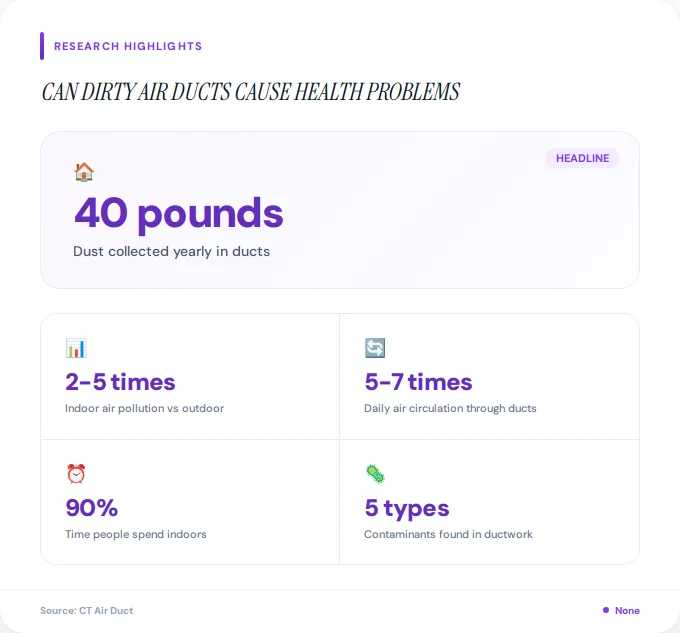
Yes, dirty air ducts can cause or worsen health problems. The EPA notes indoor air is often 2 to 5 times more polluted than outdoor air, and ducts packed with dust, mold, pet dander, and bacteria recirculate those contaminants every time your HVAC system runs. For people with asthma, allergies, or weakened immune systems, the effects can range from mild irritation to serious respiratory flare-ups.
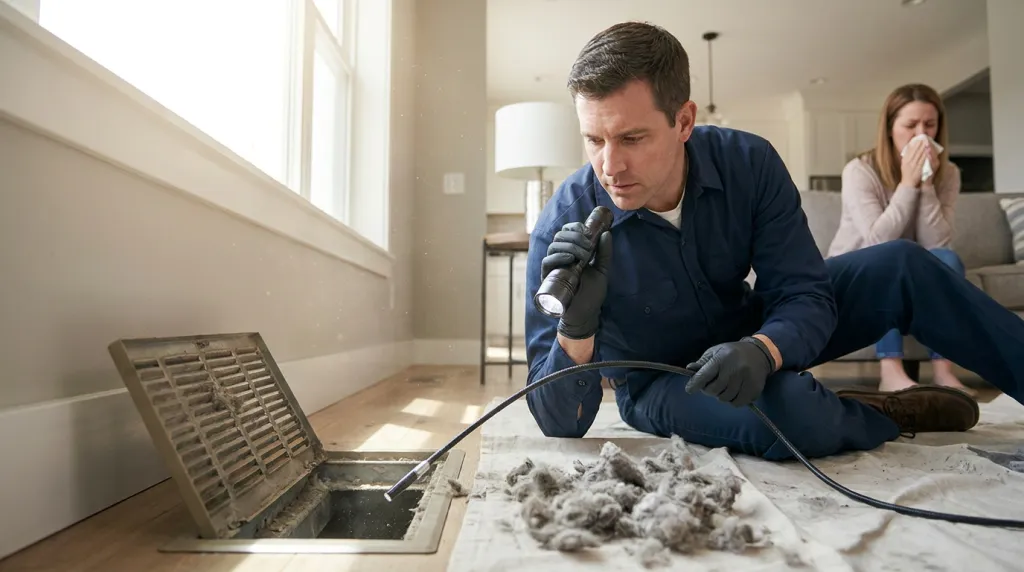
Here’s a number that surprises most homeowners: the average six-room home collects up to 40 pounds of dust per year inside its ductwork, according to industry air quality studies. That dust doesn’t just sit there quietly. Every time your furnace or air conditioner kicks on, it gets stirred up and pushed through every vent in your house. So can dirty air ducts cause health problems? The honest answer is yes, under the right conditions, and understanding exactly how and why is the first step toward protecting your family.
This article breaks down the science, the research, and the real-world warning signs so you can make an informed decision rather than relying on guesswork or sales pressure.
How Do Dirty Air Ducts Actually Affect the Air You Breathe?
Your HVAC system moves the same air through your home repeatedly, often 5 to 7 times per day. Every pass pulls air through the ductwork, where it picks up whatever has accumulated on the interior surfaces: dust, skin cells, pet dander, pollen, and in humid conditions, mold spores.
The EPA has identified indoor air quality as one of the top environmental risks to public health, noting that most people spend roughly 90% of their time indoors, where pollutant concentrations can run two to five times higher than outside. Ductwork acts as a distribution highway. If contaminants are present, they get delivered efficiently to every bedroom, living room, and office in the house.
It’s worth noting that duct cleaning alone isn’t a silver bullet. The contamination has to originate somewhere, which is why understanding what causes air duct contamination and its common sources matters just as much as cleaning the symptoms.
What’s Really Living in Your Ductwork?
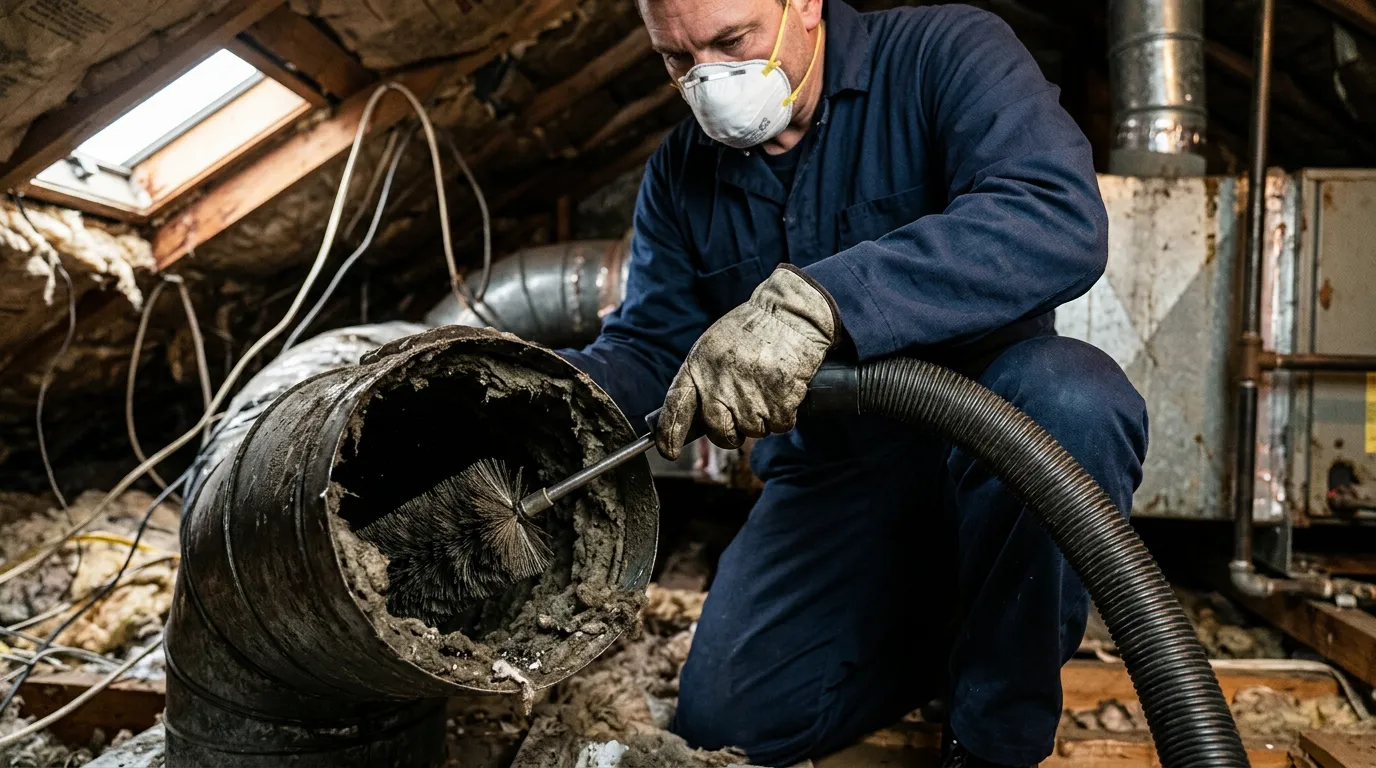
Ducts are dark, often humid, and rarely inspected, which makes them an ideal environment for biological growth. Studies cited by indoor air quality researchers have found ductwork can harbor:
- Mold and mildew spores, especially in systems with condensation issues or past water damage
- Dust mite allergens, a leading trigger for indoor allergy symptoms
- Bacteria and viruses, which can survive on dusty surfaces for extended periods
- Rodent and insect droppings, common in ducts with gaps or unsealed joints
- Pet dander and hair, which accumulates rapidly in homes with multiple animals
None of this is visible from a glance at a vent cover. That’s why so many homeowners are surprised when a professional inspection reveals the true condition of their system.
What Health Symptoms Are Linked to Dirty Air Ducts?
Not every sneeze in your house is caused by your ductwork, but a consistent pattern of symptoms that improve when you leave home is a red flag. Commonly reported issues tied to poor indoor air quality from contaminated ducts include:
- Persistent coughing, sneezing, or throat irritation
- Worsening asthma symptoms or more frequent inhaler use
- Itchy, watery eyes and nasal congestion that mimics seasonal allergies year-round
- Unexplained fatigue or headaches, particularly linked to mold exposure
- Skin irritation in sensitive individuals
- Increased frequency of respiratory infections in young children or elderly household members
If you want a deeper look specifically at allergy and asthma connections, this breakdown of whether air duct cleaning really helps allergy and asthma sufferers covers the clinical nuance in more detail.
Who Is Most at Risk From Contaminated Ducts?
Air quality problems don’t affect everyone equally. Some household members are far more vulnerable to the effects of dirty ductwork than others.
Risk: Developing lungs more sensitive to irritants
Common issue: Worsened chronic conditions (COPD, heart disease)
Common issue: Flare-ups, increased medication use
Common issue: Respiratory infections
What Does the Research Actually Say?
The scientific consensus is more nuanced than headlines suggest. The EPA has stated there’s no conclusive evidence that duct cleaning prevents health problems in every circumstance, but it also acknowledges that if ducts are visibly contaminated with mold, dust, or debris, or infested with pests, cleaning is clearly warranted.
Where research is more definitive: homes with documented mold growth in HVAC systems show measurable increases in respiratory complaints among occupants. The World Health Organization has also linked damp and moldy indoor environments to increased risk of respiratory infections, asthma development, and exacerbation of existing allergies.
The practical takeaway is that dirty ducts are not automatically dangerous in every home, but they become a legitimate health concern once visible contamination, moisture problems, or symptom patterns show up. That’s why an inspection, not assumption, is the right first move.
| Condition Found in Ducts | Typical Health Impact |
|---|---|
| Heavy dust buildup | Sneezing, congestion, aggravated allergies |
| Mold colonization | Coughing, headaches, respiratory infections |
| Rodent/pest presence | Allergic reactions, disease transmission risk |
| Pet dander accumulation | Worsened asthma, itchy eyes, skin reactions |
What Are the Warning Signs Your Ducts Need Attention?
You don’t need to open up your ductwork to know something is wrong. Watch for these indicators:
- Visible dust blowing out of vents or settling quickly on nearby surfaces
- Musty odors when the HVAC system turns on, often a sign of mold or mildew
- Increased allergy or asthma symptoms that ease up when you’re away from home
- Uneven airflow or rooms that never seem to reach the right temperature
- Recent renovation or pest activity without a follow-up duct inspection
If your home also runs a clothes dryer with a long or restricted vent run, it’s worth checking that system too. Lint buildup in dryer vents is a separate but related fire and air quality hazard, covered in detail in this guide to how dryer vents work and why cleaning matters, as well as this overview of the signs of a blocked dryer vent.
What Should You Do About It?
If you recognize several warning signs above, the next step is a professional inspection rather than guesswork. A trained technician can use cameras and moisture meters to assess what’s actually inside your ductwork before recommending a cleaning plan.
Pricing for duct cleaning varies based on your specific project, including the size of your home, the number of vents, how accessible the ductwork is, and whether mold remediation or sealing is needed. For a full breakdown of what influences cost, see this air duct cleaning cost breakdown for 2026. In some cases, especially with older homes, the ductwork itself may be deteriorating, in which case it helps to understand what ductwork replacement actually costs homeowners before committing to repeated cleanings.
Always verify that any company you hire follows NADCA certification standards, which set the industry benchmark for safe, thorough duct cleaning practices.
Key Takeaways
- Indoor air can be 2 to 5 times more polluted than outdoor air, and ducts play a direct role in circulating that pollution.
- Homes can accumulate up to 40 pounds of dust annually inside ductwork alone.
- Mold, dust mites, bacteria, and pest droppings are the most common contaminants found in dirty ducts.
- Children, older adults, and people with asthma or compromised immune systems face the highest risk.
- The EPA recommends cleaning when ducts show visible mold, dust, debris, or pest infestation, not on a fixed schedule for every home.
- Musty odors, visible dust at vents, and symptoms that improve away from home are the clearest warning signs.
- A professional inspection is the most reliable way to know whether your ducts are contributing to health symptoms.
People Also Ask
Can dirty air ducts make you sick?
Yes. Dirty ducts can circulate mold spores, bacteria, and allergens that trigger coughing, sinus irritation, headaches, and worsened asthma or allergy symptoms. Severity depends on how contaminated the ducts are and the occupant’s sensitivity.
What are the symptoms of mold in air ducts?
Common symptoms include persistent coughing, nasal congestion, headaches, fatigue, and a musty smell when the HVAC system runs. People with asthma or mold allergies often notice symptoms worsen indoors and improve when away from home.
How often should air ducts be cleaned for health reasons?
There’s no universal schedule, but most professionals suggest an inspection every 2 to 3 years, with cleaning recommended sooner if there’s visible mold, pest activity, recent renovation dust, or new allergy symptoms among occupants.
Does duct cleaning actually improve air quality?
When ducts are genuinely contaminated with dust, mold, or debris, professional cleaning can meaningfully reduce the pollutants being circulated. The EPA notes benefits are clearest in homes with visible contamination rather than as a routine, universal fix.
Frequently Asked Questions
Can dirty air ducts cause health problems in healthy adults?+
Yes, though symptoms are often milder, such as occasional congestion or irritation. Healthy adults with heavy or prolonged exposure to mold or heavy dust can still develop respiratory symptoms over time.
How do I know if my air ducts are making my family sick?+
Look for symptom patterns that improve when away from home, musty odors near vents, visible dust buildup, or a known history of water damage or mold near the HVAC system. A professional inspection can confirm whether ducts are the source.
Is it worth getting air ducts professionally cleaned?+
It’s worth it when there’s visible contamination, mold, pest activity, or unexplained respiratory symptoms in the household. Pricing varies based on your specific project, so it’s best to get a custom quote after an inspection rather than assume a flat cost.
Can dirty ducts cause headaches?+
Yes, headaches are a commonly reported symptom of mold exposure and poor indoor air quality linked to contaminated ductwork. If headaches consistently occur at home and ease elsewhere, it’s worth having your system checked.
Does the EPA recommend regular duct cleaning?+
The EPA does not recommend cleaning on a fixed schedule for every home, but it does recommend cleaning when ducts show visible mold, dust buildup, debris, or infestation. Visible contamination is the clearest trigger for action.
What’s the difference between dirty ducts and a dirty dryer vent?+
HVAC ducts circulate air throughout your home, while dryer vents expel lint and moisture outdoors and pose a separate fire risk when clogged. Both can affect air quality and should be inspected on their own schedules.
Understanding whether your home’s air quality is being compromised by dirty ductwork starts with a real inspection, not guesswork. If you’ve noticed persistent dust, musty smells, or allergy symptoms that seem tied to your house, CT Air Duct can provide a thorough assessment and a straightforward, honest quote. Learn more about our approach on our about page, review our pricing information, or reach out today to schedule an inspection and breathe easier with confidence.