
Quick Answer
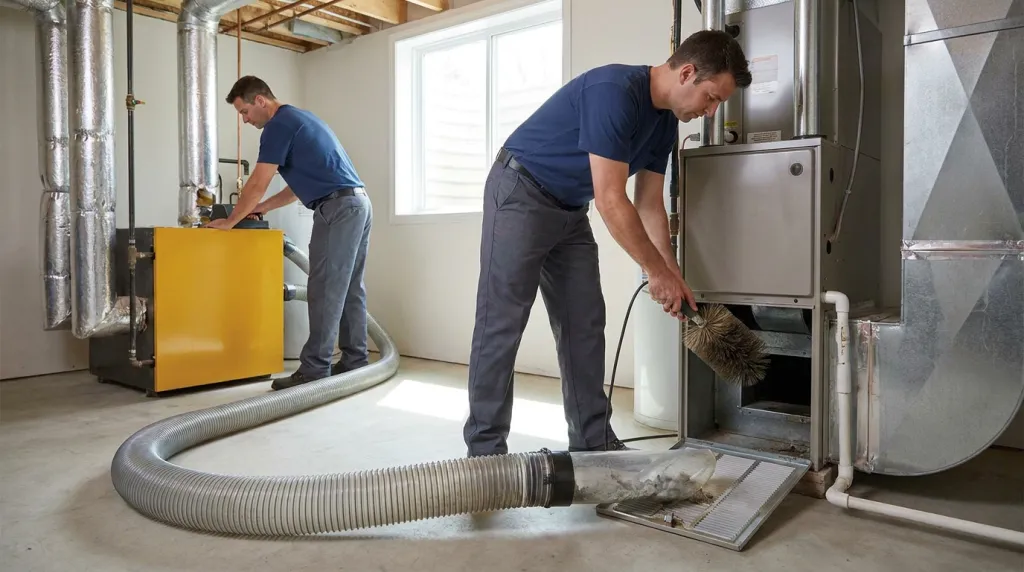
HVAC duct cleaning services use negative-pressure vacuum systems paired with agitation tools to dislodge and remove dust, debris, mold spores, and allergens built up inside supply and return ducts. Technicians inspect the full system, seal off registers, create negative pressure with a powerful vacuum collection unit, then physically agitate every run so contaminants are pulled out rather than pushed deeper into the home. The real value shows up in airflow, allergy symptoms, and system efficiency, not just a cleaner-looking vent cover.
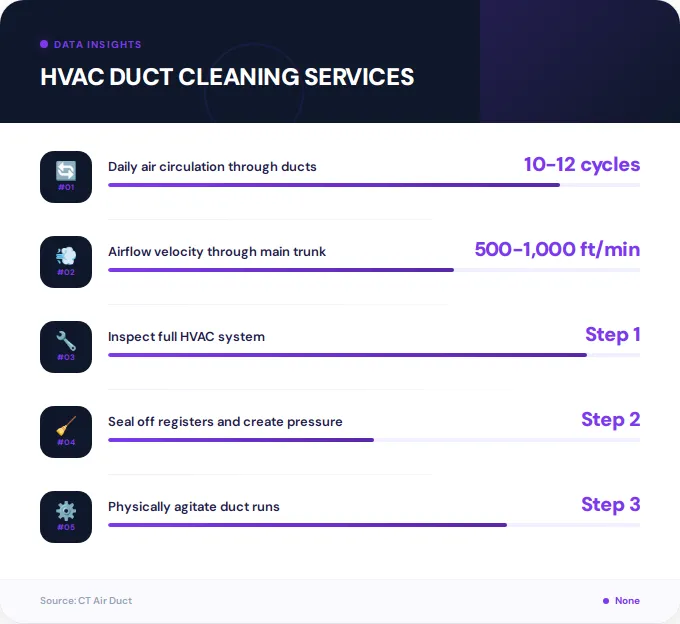
Most homeowners picture a thin layer of dust when they think about dirty air ducts. The reality is more complicated: a typical duct system can circulate air through 10 to 12 complete cycles per day, meaning whatever sits inside your ductwork gets redistributed through your living space dozens of times before you even notice a problem. HVAC duct cleaning services exist because ductwork is essentially a hidden ecosystem, and understanding the science behind what builds up there, and how professionals actually remove it, helps you judge whether your system needs attention or whether you’re being sold a service you don’t need.
This guide breaks down the contamination process, the professional cleaning method step by step, and the specific warning signs worth watching for, so you walk away understanding the mechanics before you ever pick up the phone.
Why Do HVAC Ducts Get Contaminated in the First Place?
Ductwork contamination isn’t random. It follows predictable physics: air moving through metal or fiberglass-lined channels loses velocity at bends, joints, and branch takeoffs, and wherever airflow slows down, particles drop out of suspension and settle on interior surfaces. Over months and years, that settled material builds into a layer that traps moisture, skin cells, pet dander, and construction debris.
Several sources feed this buildup continuously. Outdoor air infiltration brings in pollen and dust, indoor activity sheds skin flakes and fibers, and attached garages or crawlspaces can introduce rodent droppings or insect debris into return runs. For a deeper look at where these particles originate, this breakdown of air duct contamination types and sources walks through each contributor in detail.
Humidity plays an outsized role too. When moist air condenses inside ductwork, usually near the evaporator coil or in poorly insulated runs, it creates the damp environment mold needs to colonize. That’s why duct contamination is rarely just “dust.” It’s a layered mix of organic and inorganic material that behaves differently depending on your climate and home construction.
What Actually Happens Inside a Dirty Duct System?
Once contamination accumulates, it doesn’t stay put. Every time the blower motor cycles on, air moving at 500 to 1,000 feet per minute through the main trunk line picks up loose particles and redistributes them through every connected room. This is why a single contaminated return can affect air quality throughout an entire house, not just the room closest to the problem.
There’s also a mechanical cost. Debris buildup on coil surfaces, blower wheels, and duct walls restricts airflow, forcing the system to work harder to move the same volume of conditioned air. That added strain translates into higher energy use and accelerated wear on motors and components.
The U.S. Environmental Protection Agency notes that indoor air can carry pollutant concentrations two to five times higher than outdoor air, and in some cases up to 100 times higher, largely because contaminants get trapped and recirculated indoors rather than dispersing. Ductwork is one of the primary recirculation pathways for that trapped air.
How Do HVAC Duct Cleaning Services Actually Work, Step by Step?
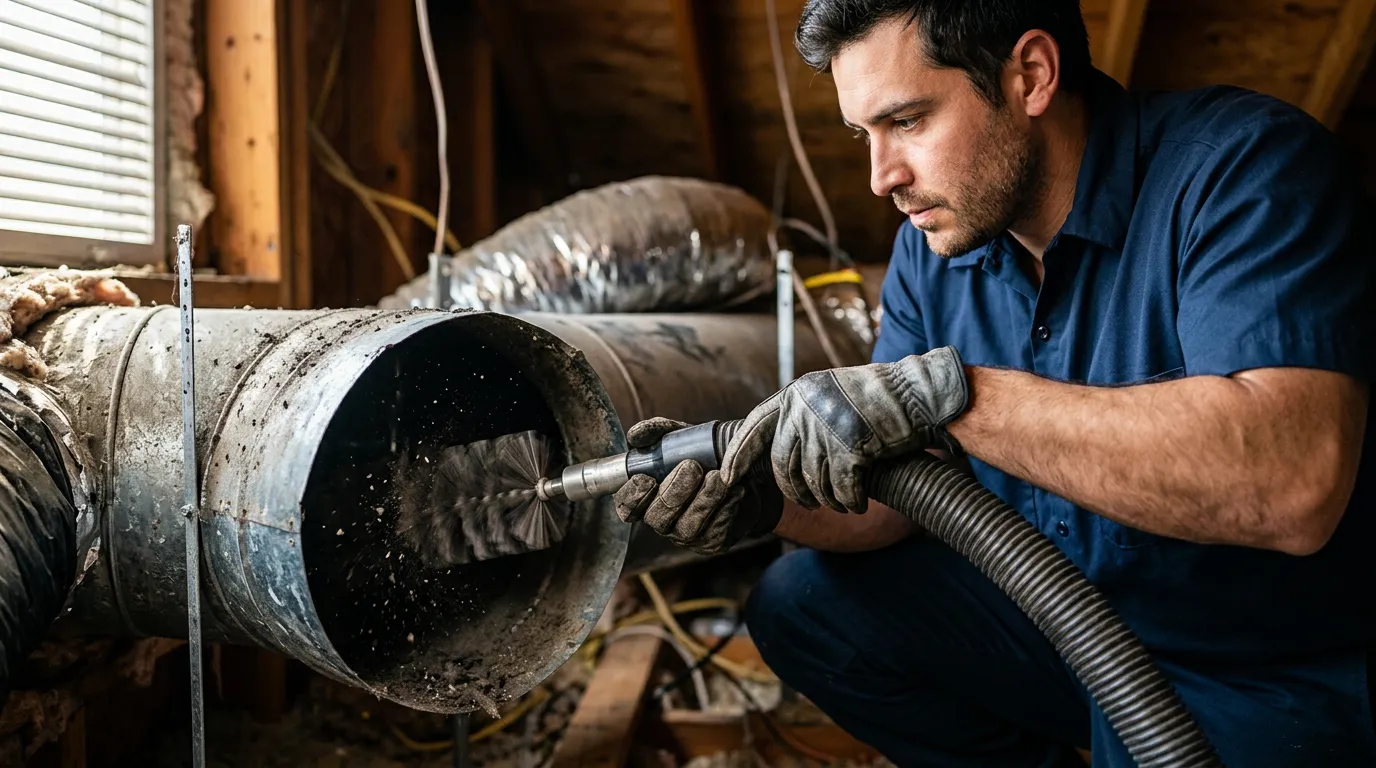
Professional duct cleaning isn’t a single action, it’s a sequence designed around one principle: contain the contamination, agitate it loose, and extract it before it resettles. The NADCA certification standards that govern this industry outline a fairly consistent process across reputable companies.
- Initial inspection. A technician visually inspects supply and return runs, often with a camera, to assess contamination level, duct material, and whether mold or pest activity is present.
- System protection. Floors, furniture, and registers near the work area get covered to prevent dust from escaping into the living space during the process.
- Negative pressure setup. A powerful vacuum collection unit connects to the ductwork, usually through a access point cut near the main trunk line, creating negative pressure throughout the whole system.
- Register sealing. Every supply and return vent except the one being actively cleaned is sealed, so air only moves in the direction the vacuum pulls it, preventing debris from blowing into rooms.
- Agitation. Technicians use rotary brushes, air whips, or compressed-air tools inside each duct run to dislodge settled material from the walls so the vacuum can capture it.
- Component cleaning. Coils, blower wheels, drip pans, and the plenum get cleaned directly, since these areas often hold the heaviest buildup.
- Final inspection and sealing. Access points are sealed, registers reinstalled, and a final camera pass often confirms the system is clear.
This entire sequence typically takes a few hours depending on home size and duct complexity. If you want a detailed time breakdown by home size and system type, this guide on how long duct cleaning actually takes covers realistic timelines room by room.
What Are the Concrete Signs Your Ducts Need Attention?
Not every home needs duct cleaning on a fixed schedule. The decision should be based on observable evidence, not guesswork. Here are the signs that actually correlate with a contaminated system.
- Visible dust discharge from registers when the system first kicks on, especially a visible puff near supply vents.
- Musty or stale odor that’s strongest when the HVAC system is actively running and fades when it’s off.
- Uneven airflow between rooms that used to feel balanced, often a sign of restriction somewhere in the trunk line.
- Recent renovation or pest activity in the home, which introduces construction dust or droppings directly into the duct system.
- Visible mold growth inside ducts or around vent covers, which should never be treated as a minor cosmetic issue.
- Unexplained increase in allergy or respiratory symptoms at home that improve when you’re away for extended periods.
- Rising energy bills without a clear explanation, which can indicate restricted airflow forcing the system to overwork.
If you’re dealing with allergy or asthma symptoms specifically, it’s worth understanding what the research actually supports before assuming duct cleaning is the fix. This look at duct cleaning and allergy relief separates proven benefits from overstated marketing claims, and this review of the health benefit research digs into the clinical evidence in more depth.
| Sign Observed | Likely Cause | Urgency Level |
|---|---|---|
| Visible mold in ducts | Moisture intrusion or condensation | High |
| Dust blowing from vents | Heavy particulate buildup | Moderate |
| Uneven room temperatures | Restricted airflow in trunk line | Moderate |
| Rising energy bills | System overworking against restriction | Low to Moderate |
Is DIY Duct Cleaning Ever a Good Substitute for Professionals?
Homeowners can reasonably handle surface-level tasks like replacing filters, vacuuming visible vent covers, and wiping down accessible return grilles. These steps help, but they don’t reach the deeper duct runs, coil surfaces, or plenum areas where the heaviest contamination accumulates.
The core limitation is equipment. Consumer shop-vacs don’t generate the negative pressure needed to pull debris out of a 20-foot duct run, and without that negative pressure, agitation tools just push dust further down the line or blow it back into the room. Professional-grade HEPA-filtered vacuum systems are what actually make the containment method work.
There’s also a related system worth understanding separately: dryer vents. These operate on a different mechanism than HVAC ducts, since they handle lint and moisture rather than general household dust, and they carry their own fire-risk profile. This explainer on how dryer vents work and why cleaning matters and this guide to spotting a blocked dryer vent cover that system specifically.
What Affects the Cost of Professional Duct Cleaning?
Pricing for HVAC duct cleaning services varies widely based on several concrete factors, and there’s no single number that applies across homes. The main variables include:
Duct length: Longer runs take more time
Pest contamination: Needs specialized handling
Accessibility: Crawlspaces add time
Sanitizing treatment: Optional add-on
Pricing varies based on your specific project, and quality, certified work with proper containment equipment reflects real labor and equipment costs, not a quick vacuum-and-go job. If you’re also weighing a full duct replacement because of age or damage rather than cleaning, this breakdown of ductwork replacement costs in 2026 explains what drives that separate decision, and this detailed cost breakdown walks through cleaning-specific pricing factors. For an exact figure based on your home, contacting a provider directly for a custom quote is the only reliable path.
Key Takeaways
- Duct contamination builds up through predictable airflow physics, settling heaviest at bends, joints, and slow-moving sections of ductwork.
- A contaminated system recirculates particles through every connected room each time the blower cycles on, not just near the source.
- Professional cleaning relies on negative pressure plus physical agitation, a combination consumer equipment can’t replicate.
- Visible dust discharge, musty odors, uneven airflow, and rising energy bills are concrete, observable signs worth acting on.
- DIY efforts help at the surface level but can’t reach deep duct runs or coil surfaces the way certified equipment does.
- Pricing depends on system size, condition, material, and accessibility, so a custom quote beats any flat estimate.
- Mold presence inside ductwork should always be treated as a high-urgency issue, not a cosmetic one.
People Also Ask
How often should HVAC ducts be professionally cleaned?
Most homes benefit from professional duct cleaning every 3 to 5 years, though this shifts based on pets, allergies, recent renovations, or visible contamination. Homes with none of those factors may go longer between cleanings without issue.
Does duct cleaning actually improve air quality?
It can, particularly when contamination is visible or mold is present, since removing the source reduces recirculation. The effect is most noticeable for people with allergies or asthma, while benefits are smaller in homes with minimal existing buildup.
Can dirty ducts actually make you sick?
Dirty ducts can contribute to respiratory irritation, allergy flare-ups, and worsened asthma symptoms, especially when mold or significant dust buildup is present. They’re rarely the sole cause of illness, but they can be a meaningful contributing factor in a home’s overall indoor air quality.
What’s the difference between duct cleaning and dryer vent cleaning?
Duct cleaning addresses the HVAC system’s supply and return runs, which carry conditioned air throughout the home. Dryer vent cleaning targets a separate, dedicated line that expels lint and moist air outside, and it carries distinct fire-safety implications if neglected.
How long does it take to clean HVAC ducts in an average home?
Most residential jobs take between two and five hours depending on the number of vents, duct accessibility, and the level of contamination present. Larger homes or systems with heavy buildup can take longer.
Frequently Asked Questions
What equipment do professional HVAC duct cleaning services use?+
Technicians use a HEPA-filtered negative-pressure vacuum collection system paired with agitation tools like rotary brushes, air whips, or compressed-air devices. Registers throughout the home are sealed except for the one actively being cleaned, so debris moves only toward the vacuum.
Is HVAC duct cleaning messy or disruptive?+
A properly performed job should create minimal mess since the negative-pressure method is designed to contain debris inside the vacuum system rather than release it into the home. Technicians typically cover flooring and furniture near access points as an added precaution.
How do I know if a duct cleaning company is legitimate and NADCA certified?+
Ask directly whether the company holds NADCA certification and request documentation of their process, including whether they seal registers and use negative-pressure equipment. A detailed checklist of what to verify is available in this NADCA certification guide.
Will duct cleaning lower my energy bills?+
If restricted airflow was forcing your system to work harder, removing that buildup can improve efficiency and modestly reduce energy use. The effect size depends on how severe the contamination was beforehand.
Should I clean my ducts and dryer vent at the same time?+
These are separate systems with different contamination types and risks, but scheduling them together is often convenient and efficient. Many providers offer both services in a single visit.
What does a professional duct cleaning quote typically include?+
A thorough quote should outline the inspection findings, number of vents and runs to be cleaned, whether coil or sanitizing services are included, and any additional charges for mold treatment or difficult access points. Pricing varies based on your specific project, so reviewing current pricing information or requesting a written quote is the best way to know what to expect.
Understanding the science and process behind duct contamination puts you in a stronger position to judge whether your home actually needs service, and when it does, working with a team that follows a documented, containment-based process matters more than any marketing claim. Learn more about professional air duct cleaning services, explore our background and approach, or reach out for a free, no-obligation quote built around your home’s specific duct system. You can also visit CT Air Duct directly to see current service areas and availability.